Graduate Group Faculty

David E. Block, Ph.D.

  • Professor
  • Viticulture and Enology
Dept. of Chemical Engineering and Materials Science. Development of novel optimization methods for bioprocessing, including use of artificial neural networks; optimization based on historical data and efficient methods of bioprocess development; process monitoring methods for wine processing; fermentation of biological control agents active against grape plant pathogens.

Julien Delarue, Ph.D.

  • Assistant Professor in Sensory & Consumer Science
  • Food Science and Technology
Dr. Delarue’s research focuses on methods to measure sensory perception and preferences and on their effective use in food design. He seeks to develop high validity consumer-oriented methods. In particular, his research explores the role of context in hedonic measures using immersive environments and digital technologies. He also works to develop and validate rapid and flexible descriptive analysis methods with application to new product development and consumer research. Using these methods, he seeks to understand the sensory determinants of food preferences and to finds levers to drive healthy and sustainable food behaviors.

Stephanie Dungan

  • Professor and Engineer Emeritus
  • Food Science and Technology
Dr. Dungan investigated the properties of amphiphilic molecules (i.e. surfactants, emulsifiers) in solution and at interfaces. Her research focused on the way that surfactant interfacial properties control the rate of migration of hydrophobic solutes such as lipids or flavors within food emulsions. The influence of proteins on the self-assembly of amphiphiles into nanostructures such as microemulsions and liquid crystals was also an active area of interest.
2202 Robert Mondavi Institute - South

Susan E. Ebeler, Ph.D.

  • Professor
  • Viticulture and Enology
Flavor chemistry and analysis; interaction of flavors with other (non-volatile) food/beverage components. correlation of instrumental and sensory methods of flavor analysis; health effects of wine; development of analytical methodologies for analysis of wine components.
3148 RMI North

Oliver Fiehn, Ph.D.

  • Professor
  • Genome Center
Metabolomics, Molec & Cell Bio, UC Davis Genome Center - Application of metabolomic techniques to study the impact of food on health and, response of biochemical networks to malnutrition and stress.
1315 GBSF

Glen Fox, Ph.D.

  • Anheuser-Busch Endowed Professor of Malting and Brewing Sciences
  • Food Science and Technology
Professor Glen Fox is the Anheuser-Busch Endowed Professor Malting & Brewing Science. He has interests in raw materials used in malting, brewing and other fermented beverages as well as defining the composition of these materials and their compositional effects on brewing efficiency.
2158 Robert Mondavi Institute - North

Jacquelyn Gervay-Hague, Ph.D.

  • Professor
  • Department of Chemistry
Research in our laboratory centers on the chemical synthesis of natural products to enable integrated chemical measurements of microbial biomarkers associated with symbiotic relationships between plants and animals. Access to pure glycolipid standards is necessary to fully utilize and integrate mass spectrometry, high performance liquid chromatography, gas chromatography, and nuclear magnetic resonance measurements to track metabolites and determine their origin.
5463 Chemistry Annex

Andrew J. Gravelle

  • Assistant Professor
  • Food Science and Technology
Dr. Gravelle’s research focuses on characterizing the relationship between structural properties and functionality in foods using a materials science approach. To this end, his research activities focus on establishing a more fundamental understanding of how the composition and molecular architecture of multi-component foods impacts their mechanical and sensory response. Particular emphasis is given to characterizing fat-filled food gels, with a target of developing rational design principals that can be used to effectively implement new and emerging ingredients (such as plant-derived proteins).
2208 Robert Mondavi Institute - South

Jean-Xavier Guinard, Ph.D.

  • Professor and Sensory Scientist
  • Food Science and Technology
Taste chemoreception in man; psychophysics of fats and oils; oral sensitivities and saliva; sensory evaluation methodology; sensory properties of alcoholic beverages; chemical senses and nutrition; sensory determinants of food acceptability; consumer research.
2034 Robert Mondavi Institute - Sensory

Hildegarde Heymann, Ph.D.

  • Distinguished Professor
  • Viticulture and Enology
Sensory evaluation of wines and other food products. The study of descriptive analysis and time-intensity methodology and the use multivariate data analyses to integrate sensory and consumer ratings. The use of sensory science to study food and wine.
2030 RMI Sensory

Elizabeth Maga, Ph.D.

Biotechnology to improve human health; translation of the use of lysozyme-rich milk to fight intestinal diseases; gut biota modulation and relation to health and resistance to disease; impact of milk at the level of the intestine; relationship between casein genotypes and milk quality in goats.

David A. Mills, Ph.D.

  • Peter J. Shields Chair in Dairy Food Science
  • Food Science and Technology
Molecular genetics and microbial ecology of lactic acid bacteria employed in food and beverage fermentations; characterization of mobile genetic elements in lactic acid bacteria; profiling of mixed culture fermentations using molecular techniques.
3142 Robert Mondavi Institute - North

Ha Nguyen

  • Assistant Professor of Sensory Science
  • Viticulture and Enology
Psychophysics, sensory and consumer research integrated with cutting-edge approaches, including genetics, molecular biology, and data science, to improve product quality, food and nutrition security, and human health.
2030 Robert Mondavi Institute - Sensory

Nitin Nitin, Ph.D.

  • Department Vice-Chair; Professor and Engineer
  • Food Science and Technology
Dept. of Biological and Agricultural Engineering. Micro and Nano-Encapsulation Technologies; Nanoscale Coatings and Material Design for Controlled Release; Nanoparticles for Improved Detection Technologies; Molecular Imaging and Spectroscopy for applications in Food Quality and Safety (e.g. Food-Microbe Interactions); Transport Processes.
2214 Robert Mondavi Institute - South

Zhongli Pan, Ph.D.

  • Adjunct Professor
  • Biological and Agricultural Engineering
Value-added processing of agricultural products for food and non-food applications; characterization of thermal, chemical, physical and rheological properties of food products.
3018 Bainer Hall

Pramod K Pandey, Ph.D.

  • Associate Specialist
  • VM: Population Health and Reproduction
My research focus is controlling disease risks associated with food and animal waste; recycling of organic waste intro soil amendment; fate and transport of herbicides in food and water; and microbial water quality. I use mathematical models supported by lab and field scale data to understand contamination in environment, which has potential to impact food and water, and poses risks to the public and animal health.
4021 Vet Med 3B, 1089 Veterinary Medicine Drive

Alda Pires, Ph.D.

  • Assistant Research Scientist and Assistant Specialist in Cooperative Extension
  • VM: Population Health and Reproduction
Quantitative methods to identify strategies that improve animal health and control infectious diseases in livestock on small-scale farms. Interested in applying and developing epidemiological tools to monitor potential food safety hazards and identify strategies to reduce the dissemination of foodborne pathogens in pre-harvest small farm environments and the spread of infectious disease in the food supply. Also interested in integrating epidemiological methods such as temporal-spatial, molecular analysis and risk assessment in order to support risk-based surveillance and infectious disease control strategies, and the improvement of animal health and food safety.

Moshe Rosenberg

  • Professor Emeritus of Food Science and Technology and former Professor of Cooperative Extension
  • Food Science and Technology
Dr. Rosenberg investigated the physico-chemical, functional and microencapsulating properties of proteins, lipids and carbohydrates. Using the basic and applicable information that is derived from this research, he developed platforms and devices (microcapsules, composite gels, emulsions, etc.) for effective delivery of nutrients and bio-active compounds in food and related applications. Dr. Rosenberg’s research developed a better understanding regarding the physico-chemical principals that govern milk processability, functionality of milk constituents and the evolution of quality attributes of cheese and other dairy products. Dr. Rosenberg’s research program addressed current challenges pertinent to Food Forensics. He investigated and developed new approaches and analytical methodologies that allow authentication of foods and agricultural products as well as their regional origin.  Yet additionally, Dr. Rosenberg’s research developed applications for the concept of biorefineries in food processing as an effective means to address challenges pertaining to food security and waste generation in food processing.
2200 Robert Mondavi Institute - South

Ron C Runnebaum, Ph.D.

  • Assistant Professor
  • Viticulture and Enology
Dr. Runnebaum's research program aims to combine his interests in sustainable winemaking with his research background in nanomaterials, adsorption, heterogeneous catalysis, and reaction engineering. Winemaking-related projects include 1) Developing materials to capture CO2 and volatile organic compounds, especially from fermentation; 2) Developing fundamental understanding for the production of chemicals from winery waste streams; and 3) Designing solid-state materials for the replacement of solution-based treatments, particularly those that could improve sustainability. In addition, Dr. Runnebaum continues to investigate fundamental structure-activity relationships in chemical adsorption and reaction by nanomaterials, including zeolites and supported organometallic clusters.

Justin Siegel, Ph.D.

  • Associate Professor
  • Department of Chemistry
My scientific efforts are focused on combining computational and experimental tools to develop a fundamental knowledge of enzyme catalysis, and applying those principles to design novel proteins of therapeutic or commercial interest. Currently I am working with an international community on the development of Rosetta computational methodology for predicting and designing macromolecular structures, interactions, and functions. Using this methodology I have completed the de novo design of enzymes capable of catalyzing chemical reactions not found in nature, such as the Diels-Alder reaction. This was followed up by working with an online community, Foldit, to further engineer these proteins for enhanced activity. Most recently I have worked on the redesign of naturally occurring enzymes for the degradation of immunogenic gluten proteins, to develop a novel CO2 fixation pathways, and design of a novel anthrax therapeutic. My current focus is on the design of novel biofuel and commodity chemical biosynthetic pathways, the development of novel therapeutics, and the general understanding of the relationship between protein sequence, structure, and function.
5212 Genome and Biomedical Sciences Facility

Christopher Simmons, Ph.D.

  • Department Chair; Professor
  • Food Science and Technology
Dr. Simmons' research focuses on improving energy and water use efficiency in food processing by reclaiming energy from waste biomass streams and developing strategies for waste water treatment and recycling. Specifically, high-throughput, massively parallel sequencing and bioinformatics approaches are used to characterize microbial communities that are able to deconstruct waste biomass into fermentable sugars under industrial conditions. These data are used to discover enzymes and molecular pathways that can improve industrial bioconversion of waste biomass into biofuels. Additionally, the microbial ecology of plant-soil systems exposed to food processing effluents is studied to develop strategies for recycling of food processing waste water to agriculture.
3202 Robert Mondavi Institute - South

Jennifer T. Smilowitz, Ph.D.

  • Assistant Professor of Cooperative Extension
  • Food Science and Technology
  • Foods for Health Institute
  • Nutrition
As a Lactation Education Counselor, Dr. Smilowitz supports breastfeeding and researches dietary solutions that support the health of the mother-infant dyad. She regularly gives lectures on the benefits of breastfeeding and its impact on the infant gut microbiome to health-care practitioners across northern Californian hospitals, clinics and Women Infants and Children (WIC) staff.

Edward Spang, Ph.D.

  • Associate Professor
  • Food Science and Technology
Characterizing and optimizing the efficiency of linked water, energy, and food resource systems. He is particularly interested in applying methodologies for measuring and monitoring these systems and their interrelationships in high-resolution and across multiple scales, both geographic and temporal.
2036 Robert Mondavi Institute - Sensory

Ameer Taha, Ph.D.

  • Associate Professor
  • Food Science and Technology
Linoleic acid is a type of fat found in vegetable oils, nuts, seeds, and animal products. Small amounts of linoleic acid are required for proper nutrition, but too much may be detrimental. Americans whose diet includes a lot of processed foods typically consume too much linoleic acid, which can contribute to chronic inflammation, heart disease, and other health problems.
3162 Robert Mondavi Institute - North

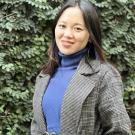
Selina Wang, Ph.D.

  • Associate Professor of Cooperative Extension in Small Scale Fruit & Vegetable Processing
  • Food Science and Technology
Dr. Wang’s research program focuses on chemical quality, purity, and nutrition parameters that occur during fruit and vegetable post-harvesting, processing and storage. This includes but not limited to (1) identifying the important chemical markers that are important for quality, purity and nutrition in food products; (2) developing robust (faster and cheaper) detection methods so they can be easily adopted by industries; and (3) modifying processing methods to improve quality, purity and nutrition. Dr. Wang is also the research director of UC Davis Olive Center.
2160 Robert Mondavi Institute - North

Luxin Wang, Ph.D.

  • Associate Professor
  • Food Science and Technology
Dr. Wang’s research lab studies the microbial safety of fresh produce, aquaculture products and animal products. Her program uses conventional microbiological technologies and new precision approaches, such as comparative genomics and metagenomics, to study the behavior of foodborne pathogens and their interactions with the background microbiome.
3210 Robert Mondavi Institute – South

Xiang Crystal Yang, Ph.D.

  • Assistant Professor
  • Department of Animal Science
Meat safety; meat quality; shelf-life of meat and meat products; post-harvest foodborne pathogen detection and control; characterization of microbiome profile for meat and meat production related environment.
2237 Meyer Hall

Jianan Zhang

  • Assistant Professor
  • Food Science and Technology
Dr. Zhang's research program investigates how diet impacts human health, focusing on both host metabolism and microbial metabolism. Her long-term goal is to understand the diet-host-microbe interactions and uncover the molecular mechanisms underlying dietary influences in both health and disease contexts.
2202 Robert Mondavi Institute South